
Zimbabwe
fka. Rhodesia, under British South Africa Company rule from 1890 until Independence in 1980
—
Designed digitally with Procreate in 2026,
Physical edition in the backlog
Species featured
Bateleur Eagle
Terathopius ecaudatus
The Bateleur — from the French for street performer, for its rocking, acrobatic flight — is a bird of the African savanna that spends up to eight hours a day in the air, covering hundreds of kilometres in search of carrion and prey across open woodland. It was a central motif of Great Zimbabwe, the stone city that gave the country its name: the Zimbabwe Bird, carved in soapstone, is most probably modelled on the Bateleur — though some scholars identify it as the African fish eagle (Hungwe). Of the eight original soapstone carvings, several were removed by colonial agents in the 1890s. One was acquired by Cecil Rhodes and installed at his Groote Schuur estate in Cape Town; others were taken to the South African Museum. A fragment of one bird was repatriated from Germany in 2003. The last of the original birds — the Chapungu, held at Groote Schuur under a legal prohibition on its transfer for over a century — was finally returned to Zimbabwe in a historic ceremony in Cape Town in April 2026, ending 137 years of displacement. The Bateleur is now listed as Endangered across its African range, its population declining as savanna woodland is converted to agriculture and it is poisoned by carcass baits laid for predators on commercial farms. A bird removed, repatriated, and still disappearing.

Tobacco
Nicotiana tabacum
The Shangwe people of the Inyoka region grew tobacco before British colonisation. Under colonial administration, that prior knowledge and cultivation practice was not a foundation to build on — it was an inconvenience to be legislated away. A 1924 colonial commission formally concluded that tobacco was “beyond the scope of the native,” and African farmers were banned from commercial tobacco production through the 1930s and into the 1960s, channelled instead into wage labour on white-owned farms. By the 1950s, Southern Rhodesia was producing twenty percent of the world’s flue-cured tobacco — an industry built entirely on expropriated land and controlled labour, from which the people who had originally cultivated the crop were legally excluded. The Lancaster House Agreement of 1979, which brought Zimbabwe to independence, protected white farm ownership for a further decade. When land reform came in 2000, the tobacco industry collapsed and then restructured: today over 127,000 small-scale Black farmers grow tobacco, producing substantially more than the white minority farms ever did. The land question was never resolved. The crop is still growing.

Msasa
Brachystegia spiciformis
Msasa is the defining tree of the Zimbabwean highveld, the woodland ecosystem that covers much of the country’s most fertile land and whose seasonal transformation is one of the most distinctive natural events in the southern African calendar: in late August and September, as the dry season ends, new msasa leaves emerge in brilliant copper, red, and gold — colours so vivid that the arrival of the rains is called “msasa spring” in Shona tradition, a seasonal marker as precise as any calendar. The same highveld that msasa woodland once covered was also the land that Cecil Rhodes’s British South Africa Company identified as the most agriculturally valuable and allocated to white settlers. The woodland was cleared for tobacco farms and maize fields. What remains is fragmented, and the ecology it supports — including the Bateleur and the White-backed Vulture — retreats with it. The tree that marks the arrival of spring in Zimbabwe still flames red on the edges of cleared farmland, growing back where it is allowed to.

Baobab
Adansonia digitata
The baobab can live for two thousand years. It stores water in its vast trunk, provides fruit, leaves, and bark used in food, medicine, and material culture across the African continent, and functions as a community gathering point and living landmark in landscapes where it has grown for longer than any human settlement around it. Colonial natural history collected and catalogued baobabs with enthusiasm — the trees were strange, dramatic, and visually compelling, useful for the kind of illustrated survey that justified scientific interest in the continent. What colonial land policy did not do was treat the landscapes in which baobabs grew as belonging to the communities that had organised their lives around them. The baobab is not endangered, but the savannas and communal lands it inhabits are under accelerating pressure from commercial agriculture and climate change — the latter increasingly linked to the deforestation that tobacco cultivation has driven across Zimbabwean communal land, where small-scale farmers burn miombo woodland to cure the same crop that white farmers once grew on stolen highveld.
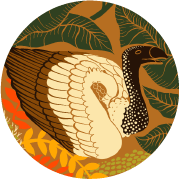
White-backed Vulture
Gyps africanus
the most numerous large raptor in Africa and the ecological engine of the savanna: a bird that can locate a carcass from kilometres away and strip it to bone in hours, preventing the spread of disease across the landscape it inhabits. It is now listed as Critically Endangered, its population having collapsed by more than half in three decades overall — and by up to 90% across its range over a longer period, with West Africa particularly devastated. The primary cause is poisoning — deliberate and incidental — by the agricultural and wildlife management practices of the commercial farming industry. Poachers poison elephant and rhino carcasses specifically to kill vultures, whose circling above a kill alerts anti-poaching rangers to their location. The commercial farming lobby has also long used poisons to protect livestock from predators, with vultures dying as secondary casualties. The wildlife and commercial farming systems that produce these pressures are both legacies of the colonial land settlement that concentrated large-scale land ownership in white hands and created the economic incentives — trophy hunting, commercial ranching, poaching — that continue to determine how the landscape is used.

Mopane
Colophospermum mopane
Colophospermum mopane is the dominant tree of Zimbabwe’s low-lying river valleys and the Zambezi basin — butterfly-shaped leaves that close in the heat of the day to reduce water loss, hard dense timber that has been used for construction, fence posts, and fuel across the region for centuries, and the host of the mopane worm (Gonimbrasia belina), a caterpillar that is among the most important sources of protein in the diet of millions of people across southern Africa. Colonial administration treated mopane woodland as low-value bush to be cleared for ranching and agricultural development, and the species has been subject to significant commercial harvesting for timber and charcoal. The mopane worm harvest, by contrast, was and remains an indigenous food system of considerable sophistication — managed across communal land by communities with detailed knowledge of caterpillar population cycles — that colonial and post-colonial agricultural policy consistently failed to recognise or protect. It is now a commercial export industry; the management knowledge that sustained it developed outside colonial economic structures, without their support, and sometimes in spite of their active indifference.

Flame Lily
Gloriosa superba
The flame lily is Zimbabwe’s national flower and one of the most visually arresting plants in the African flora. its petals swept back like flames, cycling from yellow through orange to deep crimson as they age, climbing through other vegetation on tendrils that grow from the tips of its leaves. It is sacred in some Shona traditions and has been used medicinally across the region for centuries, its tubers containing colchicine — a compound now used in cancer treatment and gout medication. The medicinal properties of Gloriosa were long known to communities across both Africa and Asia; the plant’s traditional uses are documented across more than thirty countries. Colchicine itself was already extracted commercially from the European autumn crocus (Colchicum autumnale) before Gloriosa became an alternative industrial source in the twentieth century — a shift driven by demand, not discovery. The convention of botanical naming claimed the classification; the communities whose sustained knowledge of the plant’s properties underpinned its value received nothing. The flame lily appears on the Zimbabwean coat of arms. Its pharmaceutical value was extracted by the same system that extracted everything else.
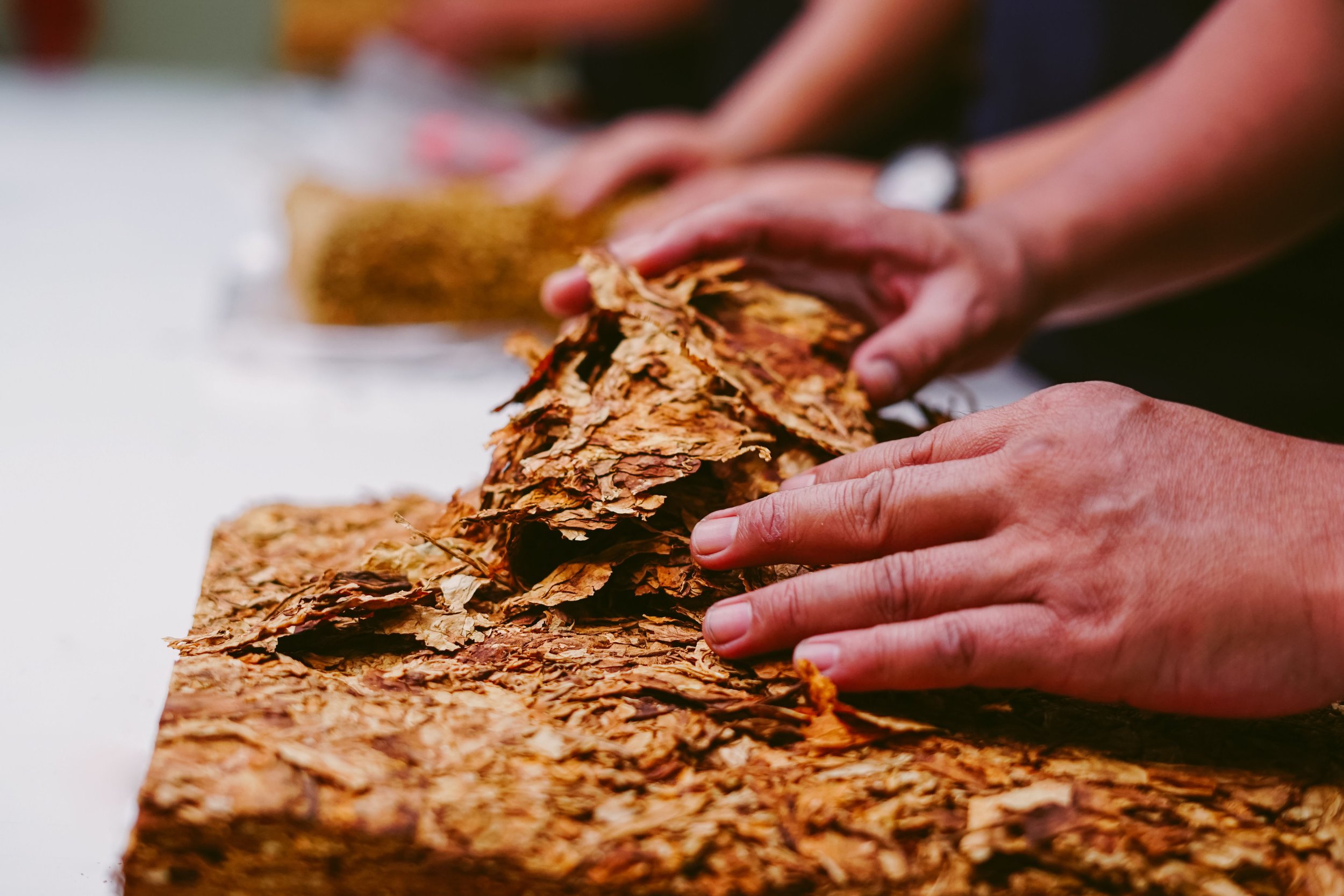
Color ThemeTobacco Leaf Gold
The golden-brown of flue-cured Virginia tobacco leaf — called the “golden leaf” by the Rhodesian settler economy that built its entire wealth on it. Gold was the original colonial motive: Rhodes came for the mines and found them disappointing. Tobacco became the real gold — extracted from soil by Black labour on stolen land, on farms whose legal ownership was withheld from African farmers by statute until 1980, and whose redistribution remains unresolved.
Cecil Rhodes chartered the British South Africa Company in 1889 and named a country after himself. By 1930, through the Land Apportionment Act, European settlers — fewer than five percent of the population — had been formally allocated around fifty percent of the arable land, including the fertile highveld. The best agricultural land was reserved for white farmers by law; Africans were confined to marginal reserves and made available as cheap labour for the farms from which they had been dispossessed. When Ian Smith’s white minority government declared unilateral independence from Britain in 1965, it was to preserve exactly this arrangement. Independence came in 1980, and with it the promise of land reform that the Lancaster House Agreement deferred for a decade. The unresolved land question that Britain bequeathed at independence has defined Zimbabwean politics ever since.