
Myanmar / Burma
Occupied 1824–1948, and one of the few former colonies to refuse the Commonwealth
—
Designed digitally with Procreate in 2026,
Published 30 March 2026
Physical edition in the backlog
Species featured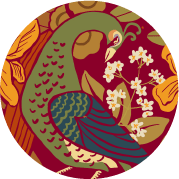
Green Peafowl
Pavo muticus
The Green Peafowl was the emblem of the Konbaung dynasty, the last Burmese royal family, whose throne the British abolished in 1885 after the Third Anglo-Burmese War and whose king they exiled to India, ending a monarchy that had ruled for over a century. When independence leader Aung San organised resistance against British rule in the early twentieth century, he chose the fighting peacock as his symbol — the royal bird repurposed as revolutionary insignia. Aung San Suu Kyi and the National League for Democracy carried it forward, the same bird on their banners during the pro-democracy movement the military has spent decades attempting to crush. Pavo muticus is now endangered across its range, its lowland forest habitat cleared for agriculture and teak plantations.
Padauk
Pterocarpus macrocarpus
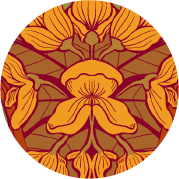
Pterocarpus macrocarpus blooms once a year, briefly and explosively — golden-yellow flowers covering the tree almost overnight, falling within days, carpeting the ground in colour. The event is closely tied in Burmese culture to Thingyan, the water festival and new year, and padauk flowers are worn in the hair as a mark of the season, their blooming treated as a collective moment of renewal. The tree's deep red heartwood was also commercially valuable — exported alongside teak as part of the broader colonial timber trade — and the forests in which it grew were subject to the same systematic clearance that defined British Burma's extraction economy. That a tree whose cultural meaning is bound to impermanence and annual rebirth should also have been a target for permanent extraction is the kind of colonial irony this series is built to hold. The padauk is the Burmese new year in wood. The British logged it.
Taro
Colocasia esculenta
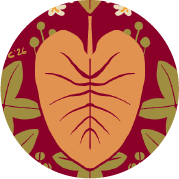
Taro is a staple crop cultivated across Rakhine State for generations, its broad, waxy leaves as ordinary and persistent as the Rohingya communities who grew it. The leaf has a physical property that became a proverb and then a symbol: water falls on it, beads up, and rolls off without leaving a trace — Hoñsu Fathar Faaní in Rohingya, water on a taro leaf. The Rohingya use it to describe what the world has done to them: denied nationality, denied documentation, pushed across borders, treated as people who leave no mark. More than 700,000 Rohingya fled to Bangladesh in 2017 following a military campaign of systematic violence, burning, and mass killing — a crisis with roots in the colonial period, when British administrators drew the boundaries of Burma without adequate recognition of the Rohingya as a distinct people with a continuous presence in Arakan, laying the groundwork for the ethnic exclusions that followed independence. In 2025, Rohingya artists in the Kutupalong refugee camp — the largest in the world — created taro leaf artworks in woodcarving, ceramics, weaving, and embroidery as acts of cultural survival and resistance. One weaver said: "The taro leaf is our document."
Teak
Tectona grandis
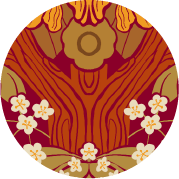
Teak was the reason Britain annexed Burma. The Bombay Burmah Trading Corporation had held logging concessions in Upper Burma since 1862, extracting Tectona grandis at a rate that made it one of the most profitable colonial operations in Asia — teak being uniquely resistant to rot, insect damage, and seawater, and therefore the preferred timber for naval shipbuilding, railway sleepers, and imperial infrastructure across the empire. When the Burmese court disputed the Corporation's accounts and imposed fines in 1885, Britain declared war within weeks and completed annexation within a month. A country was absorbed into the empire to protect a timber contract. The teak forests of the Irrawaddy watershed, some of the oldest and most biodiverse in Asia, were worked by elephants under a management system the British inherited from Burmese foresters and scaled beyond recognition. Burma supplied an estimated three-quarters of the world's teak at the height of colonial extraction. The forests have not recovered.
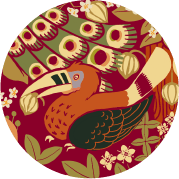
Burmese Rufous-necked Hornbill
Aceros nipalensis
The Rufous-necked Hornbill is a bird of the undisturbed primary forest — large, slow to breed, entirely dependent on old-growth canopy for the tree cavities where it nests and the fruiting trees that feed it. It cannot adapt to logged or fragmented forest, which makes it a precise index of the destruction wrought by the teak extraction industry the British colonial administration built across Burma from the mid-nineteenth century. The Irrawaddy valley and the hill forests of the north were among the most intensively logged landscapes in colonial Asia: the Bombay Burmah Trading Corporation, awarded its teak concession by the British in 1862, was extracting timber at a scale that provoked a formal dispute with the Burmese court — a dispute Britain resolved by annexing the entire country in 1885. The Rufous-necked Hornbill is now listed as Vulnerable and declining, its range retreating in direct proportion to what remains of the forest the colonial teak industry was designed to clear.

Thanaka
Hesperethusa crenulata
Thanaka is a cosmetic paste made from the ground bark of Hesperethusa crenulata — worn on the face as a pale yellow-white pigment, simultaneously sunscreen, skin conditioner, and cultural marker, by Burmese people across regions, ages, and genders for over two thousand years. It is one of the most visible and continuous features of Burmese daily life, and entirely legible as a marker of Burmese identity to anyone who has spent time in the country. The British colonial administration, which documented Burmese material culture extensively in the service of resource assessment and social control, treated thanaka as an ethnographic curiosity — evidence of difference to be catalogued rather than a practice to be understood on its own terms. It survived colonisation, survived military dictatorship, and survives now: a daily act of self-application that no extraction economy ever found a way to commodify at scale.
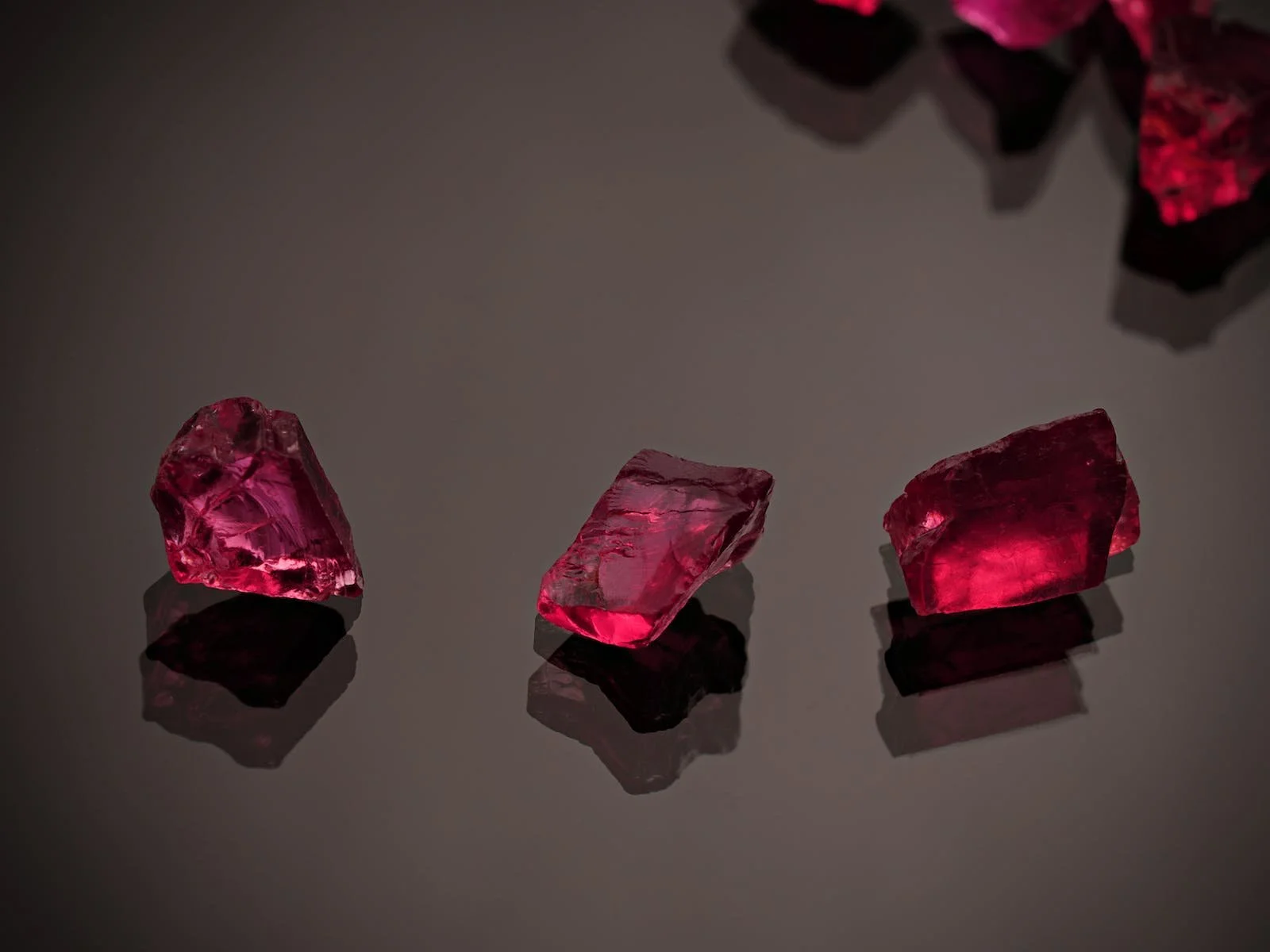
Color ThemePigeon’s blood rubies
The trade name for the finest Burmese ruby's deep, self-luminous red — takes its colour from the Mogok Valley, which has supplied the world's most prized rubies for centuries and whose mines the British colonial administration systematically folded into the extraction economy of the Raj. The most famous stone is the Nga Mauk, a 98-carat royal ruby surrendered by King Thibaw to Colonel Edward Sladen on the night of the 1885 annexation, disappeared that same evening and has not been seen since — believed by many to sit, unacknowledged, somewhere in the British Crown Jewels.