
Jamaica
Seized from Spain in 1655 and developed as a lucrative plantation economy heavily reliant on African slave labour. It transitioned into a Crown Colony in 1866, and finally gained independence in 1962
—
Designed digitally with Procreate in 2026,
Physical edition in the backlog
Species featured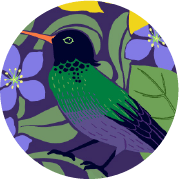
Doctorbird
Trochilus polytmus
Jamaica's national bird. It takes its common name from the long, flowing black tail streamers of the male, which resemble the tailcoats worn by nineteenth-century physicians, and from local folklore suggesting the bird's sharp bill resembled a doctor's lancet. It is endemic to Jamaica, found nowhere else on earth, and its iridescent green plumage and extraordinary aerial agility made it a subject of fascination for colonial-era natural historians, who collected and exported specimens to European museums and private collections as exemplars of tropical exotica. The doctorbird's range and population remain relatively stable, but its forest habitat — particularly in Jamaica's remaining areas of montane and wet limestone forest — continues to face pressure from agricultural conversion and development, processes whose roots lie in the systematic deforestation of the island that began under sugar plantation expansion in the seventeenth and eighteenth centuries. The doctorbird appears on Jamaican currency and in national iconography; it survived the period of intense colonial natural history collecting that catalogued and removed so much else from the island for European study.
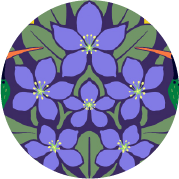
Lignum Vitae
Guaiacum officinale
Lignum vitae — "wood of life" — hosts Jamaica's national flower and among the densest, hardest woods in the world, so resinous it will not float and so durable it was used for centuries in British naval shipbuilding: bearings, pulley blocks, and ship components subjected to constant friction and saltwater exposure, applications that no other available timber could withstand as well. The tree's blue-purple flowers — the source of this edition's colour theme — bloom briefly and vividly across the dry forest understorey where the species grows. The irony embedded in lignum vitae's colonial history is direct and total: a Jamaican tree, extracted and processed under a colonial economy built on the forced labour of enslaved African people, was used to build and maintain the very naval vessels that enforced that colonial system and the transatlantic slave trade that supplied its labour. The wood that sailed the ships of empire was felled from the land empire had stolen. Centuries of harvesting for shipbuilding and medicinal use — the resin was historically used to treat various ailments, including, controversially, as an early treatment attempted for syphilis — have left wild lignum vitae populations significantly depleted across its range, and it is now a protected species under CITES.
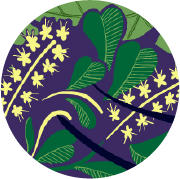
Jamaican Logwood
Haematoxylum campechianum
Logwood produces haematoxylin, a dye compound that yields a deep blue-purple to black colour and was, for over two centuries, one of the most commercially significant dyewoods in the Atlantic economy — used to colour wool and silk textiles across Europe before the development of synthetic dyes in the late nineteenth century. Logwood is not native to Jamaica; it originated in the Yucatán and Central America, and its trade was so lucrative that English buccaneers and unlicensed loggers established settlements specifically to cut and smuggle it, operating in direct competition with Spanish colonial claims to the region — piracy and dye extraction were, for much of the seventeenth century, functionally the same economic activity. Logwood was subsequently cultivated commercially across Jamaica and other British Caribbean colonies, becoming a significant plantation export in its own right, grown and harvested by enslaved labour alongside sugar. The wood that coloured the textiles of European fashion houses was cut by people who owned nothing, including, under colonial law, their own labour.
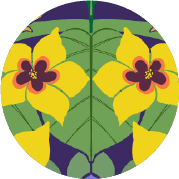
Blue Mahoe
Talipariti elatum
Blue mahoe is Jamaica's national tree alongside lignum vitae in cultural significance, named for the striking blue-green to purple streaking that appears in its grain when the wood is cut and polished — a natural figuring so distinctive that the timber became, in the twentieth century, a prized material for fine furniture, musical instruments, and decorative woodwork, marketed internationally as a uniquely Jamaican product. The tree itself is fast-growing and was used during the colonial period for soil stabilisation on plantation land that had been degraded by the intensive monoculture sugar cultivation that defined Jamaica's colonial economy — blue mahoe was, in effect, planted to repair some of the ecological damage that the plantation system had caused, a small-scale environmental remediation undertaken without acknowledgement of the labour system that had necessitated it. Its bark fibre was also used historically for cordage and rope-making, a continuation of indigenous Taino plant-use knowledge that survived, in fragments, into the colonial and post-colonial periods despite the near-total demographic destruction of Jamaica's indigenous population following European contact.
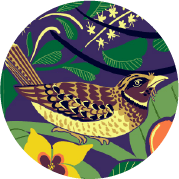
Jamaican Pauraque
Siphonorhis americana — EXTINCT
The Jamaican Pauraque was a nocturnal bird, related to the nightjar family, endemic to Jamaica and almost certainly already rare by the time European naturalists documented it in the nineteenth century. It has not been confirmed alive since the late 1800s and is now generally considered extinct, though its disappearance was so poorly documented — no detailed contemporary account of its decline survives — that it represents one of the most obscure extinctions in Caribbean ornithological history: a species that vanished from the scientific record almost as quietly as it had existed within it. Its extinction is attributed to the same forces that have driven the collapse of other Jamaican endemic species: deforestation for sugar and later other plantation agriculture, the introduction of the small Indian mongoose in 1872 specifically to control rats in cane fields — a colonial agricultural intervention that became one of the most ecologically destructive invasive species introductions in Caribbean history, predating ground-nesting birds across the island — and habitat loss compounding across three centuries of colonial land transformation. The pauraque's extinction was never witnessed. It is documented only by its absence.
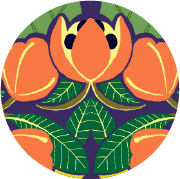
Ackee
Blighia sapida
Ackee is Jamaica's beloved fruit, central to the island's most iconic dish — ackee and saltfish — and is not native to Jamaica: it originated in West Africa, where it remains an important food crop, and was transported to the Caribbean during the transatlantic slave trade, most likely aboard slave ships, alongside the people who were forcibly carried across the same ocean. Its scientific name commemorates Captain William Bligh, who formally introduced the plant to Britain's botanical institutions in the 1790s — the same Bligh of the Bounty mutiny, whose career was substantially built on transporting plant species across the empire's botanical and agricultural networks, most famously breadfruit, intended as a cheap food source for enslaved labourers on Caribbean plantations. Ackee requires careful preparation: unripe or improperly prepared fruit contains hypoglycin, a toxin that causes a serious and sometimes fatal illness known as Jamaican vomiting sickness. The fruit that crossed the Atlantic in the hold of a slave ship, alongside the people it would eventually feed, became — through generations of enslaved and then free Jamaican cooks who learned its preparation through trial, observation, and hard-won knowledge — the national dish of the nation that survived that crossing.
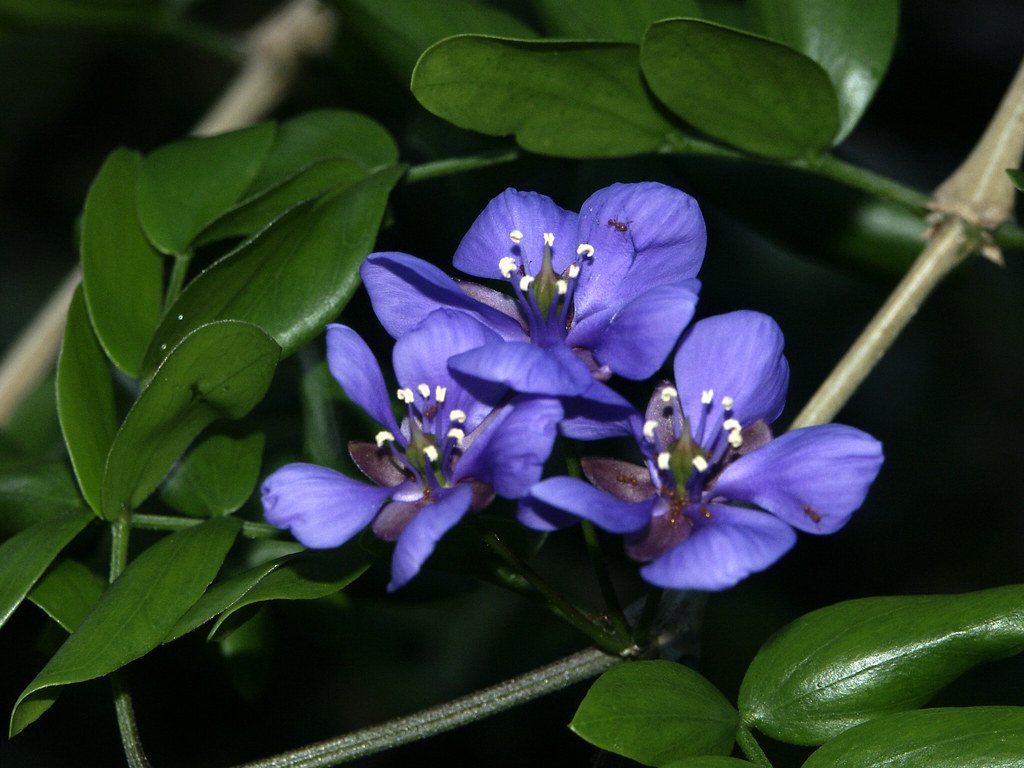
Color ThemeLogwood Blue-Purple
The deep blue-purple dye extracted from the heartwood of Haematoxylum campechianum — logwood — once among the most valuable commodities in the British Atlantic economy, fought over by pirates, smugglers, and colonial navies for two centuries before synthetic dyes made it obsolete. The same blue-purple appears in the flowers of the lignum vitae, Jamaica's national tree, whose wood built the ships that carried the empire that extracted both species.