
Australia
Established as an English penal colony from 1788–1901, on the doctrine of terra nullius (nobody's land)
—
Designed digitally with Procreate in 2026,
Published 30 March 2026
Physical edition in the backlog
Species featured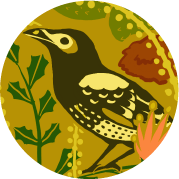
Regent Honeyeater
Anthochaera phrygia
The Regent Honeyeater is a bird of the eucalypt woodlands of southeastern Australia. It’s a specialist nectarivore that depends on a narrow range of flowering trees, particularly box and ironbark, whose population has been so dramatically reduced by land clearing that the species is now critically endangered, with fewer than 400 individuals remaining in the wild. Its decline tracks almost exactly the history of agricultural expansion in New South Wales and Victoria: land that was cleared from the 1820s onwards to produce wool and wheat for British markets, under a colonial land grant system that treated the continent as empty and its ecosystems as obstacles. The Regent Honeyeater has now been in captive breeding for long enough that wild birds no longer remember their own song, learning it instead from recordings — a species that has lost not only its habitat but its cultural transmission.
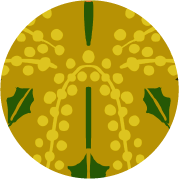
Golden Wattle
Acacia pycnantha
The Golden Wattle flowers in late winter and early spring across southeastern Australia, its clusters of bright yellow blooms appearing before most other plants have broken dormancy. It has been a marker of Australian identity since the colonial period, carried by settlers as a symbol of the new continent, eventually formalised as the national floral emblem in 1988. What that formalisation did not address was that wattle had been in relationship with Aboriginal peoples for tens of thousands of years before European arrival — its seeds ground for food, its bark used for medicine and tanning, its flowering times embedded in seasonal ecological knowledge that colonial land management systematically displaced. The gold of the wattle is the gold of the nation. What the nation was built on is a different question.
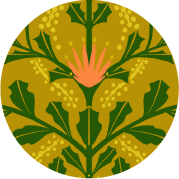
Matchstick Banksia
Banksia cuneata
Banksia cuneata — Matchstick Banksia — takes its common name from the pink flower spikes that emerge from its low, dense shrub form like spent matches, vivid against grey-green foliage. The genus Banksia was named after Joseph Banks, the botanist who first catalogued it at Botany Bay in 1770 and who spent the subsequent decades using his institutional authority at Kew Gardens to direct the systematic economic botany of the empire. That the most endangered genus in Australia bears his name is among the period's more pointed ironies. Banksia cuneata is classified as Endangered: 93% of its habitat has been cleared for Wheatbelt agriculture — the grain export economy that colonial land grants created — and the remainder is fragmented by a pathogen, Phytophthora cinnamomi, introduced to Australian soils by European settlement. The disease that is finishing what the clearing began arrived in the same ships.
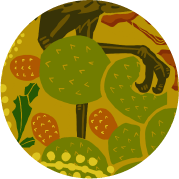
Prickly Pear
Opuntia species
The prickly pear is not native to Australia. It was introduced deliberately, at the instruction of Joseph Banks — the botanist who sailed with Cook in 1770 and whose imperial vision shaped the colony's agricultural ambitions — with the intention of establishing a cochineal dye industry to break Spain's monopoly on the scarlet pigment that coloured British military uniforms and luxury textiles. The cochineal insects that produce the dye live exclusively on prickly pear. The scheme failed commercially but the cactus did not: by the 1920s, Opuntia had spread across sixty million acres of Queensland and New South Wales, a dense, impenetrable mass that rendered the land unusable. It required a decade-long biological control programme — the deliberate introduction of Cactoblastis moth larvae — to bring it back. The prickly pear is the colonial project made botanical: introduced to extract value, impossible to control, requiring further intervention to manage the consequences of the first.
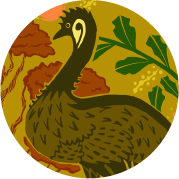
Emu
Dromaius novaehollandiae
The emu is among the oldest living bird lineages on earth — a flightless giant that has walked the Australian continent for over eighty million years. The colonial relationship with it was immediate and extractive: emus were shot for food by the first British settlers, their oil rendered for lamps, their eggs collected. The species survived this, but the transformation of the Australian landscape that followed did not leave it unchanged. Woodland clearing for sheep stations pushed emu populations into grain-farming areas, triggering the extraordinary episode of 1932 in which the Australian military deployed machine guns against an emu population in Western Australia in what became known as the Great Emu War. The birds proved effectively unconquerable. Major G.P.W. Meredith, who commanded the operation, reported that the emus "have adopted guerrilla tactics."
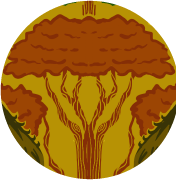
Australian Red Cedar
Toona ciliata
Australian Red Cedar, known from the moment of colonisation as "Red Gold" — was the first natural resource the British systematically extracted from the continent. Logged from 1791, just three years after settlement, its timber was loaded into empty convict ships returning to England as ballast-with-value, replacing the scarce African and Indian mahogany in British furniture and fitments. The cedar-getters who worked the forests of the New South Wales ranges developed their own frontier economy, floating logs down river systems to the coast. By 1900 it was commercially extinct: every accessible tree had been taken. Toona ciliata is a rainforest species that cannot regenerate without canopy; the forests it anchored did not recover. What had taken millions of years to grow was gone in a century.
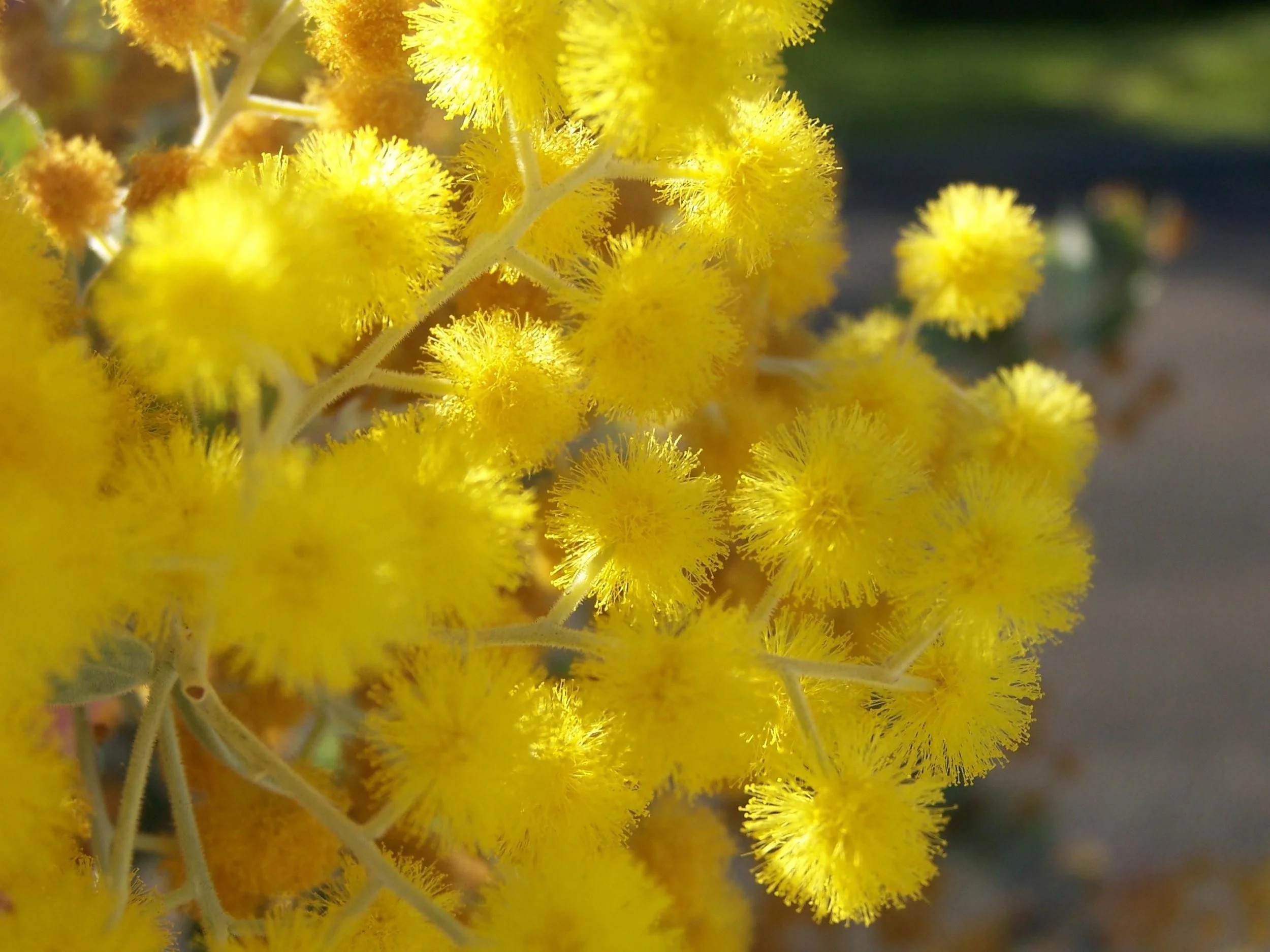
Color ThemeGolden Wattle
Officially recognized as Australia's floral emblem in 1988, it is often used for national celebrations, including Wattle Day on September 1st, and as a symbol of remembrance. Indigenous Australians traditionally used the wattle for firewood, medicinal purposes, and food, with seeds high in protein. A hardy plant, it’s one of the species that can survive Australia’s bushfire season. It is also a symbol of resilience, the tough coats of their seed pods mean that even if the entire parent tree has been burnt, they’re still able to grow and survive.